
Electromagnetic Signature
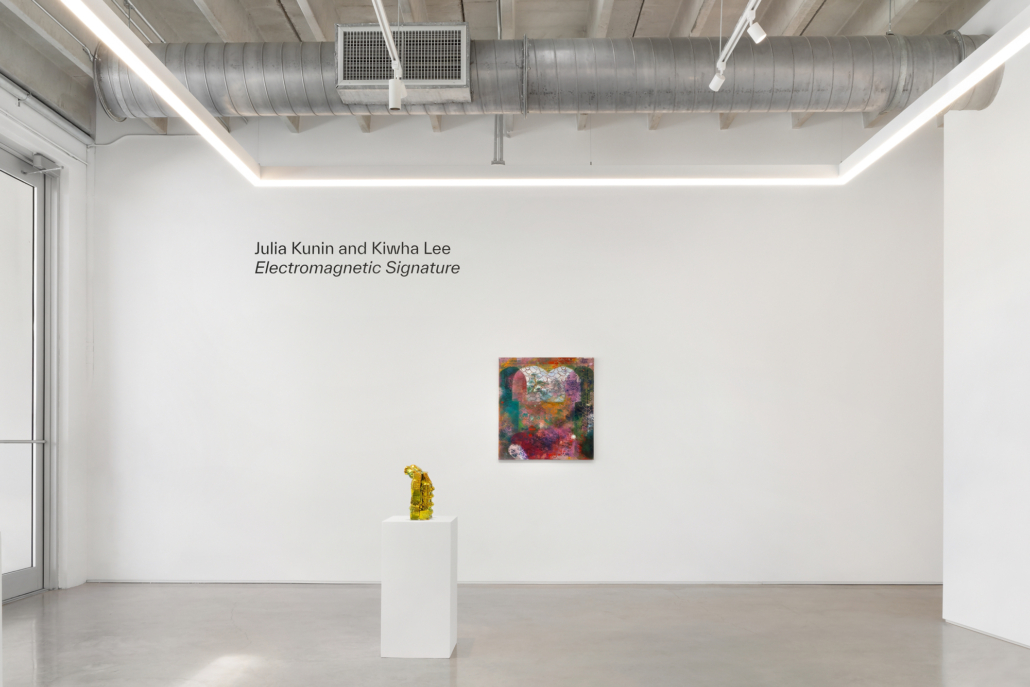
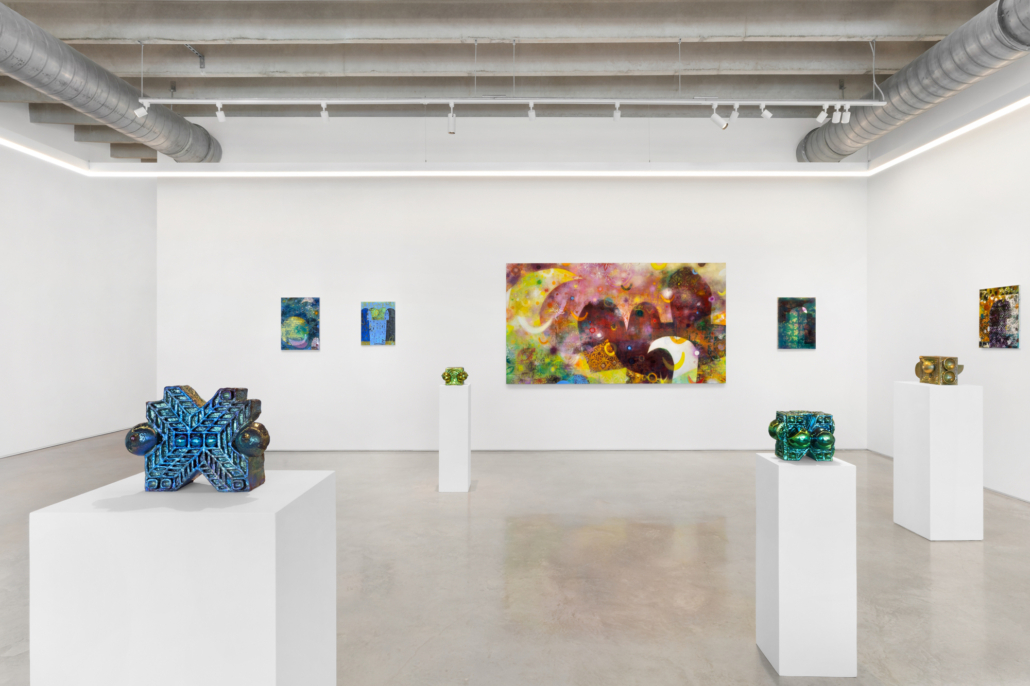
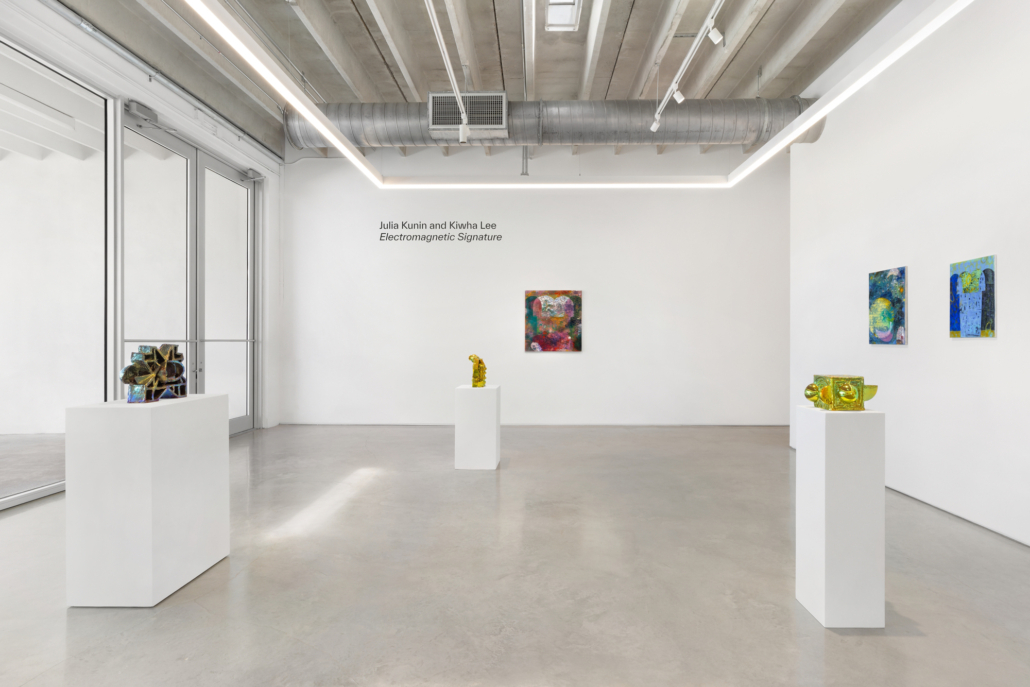
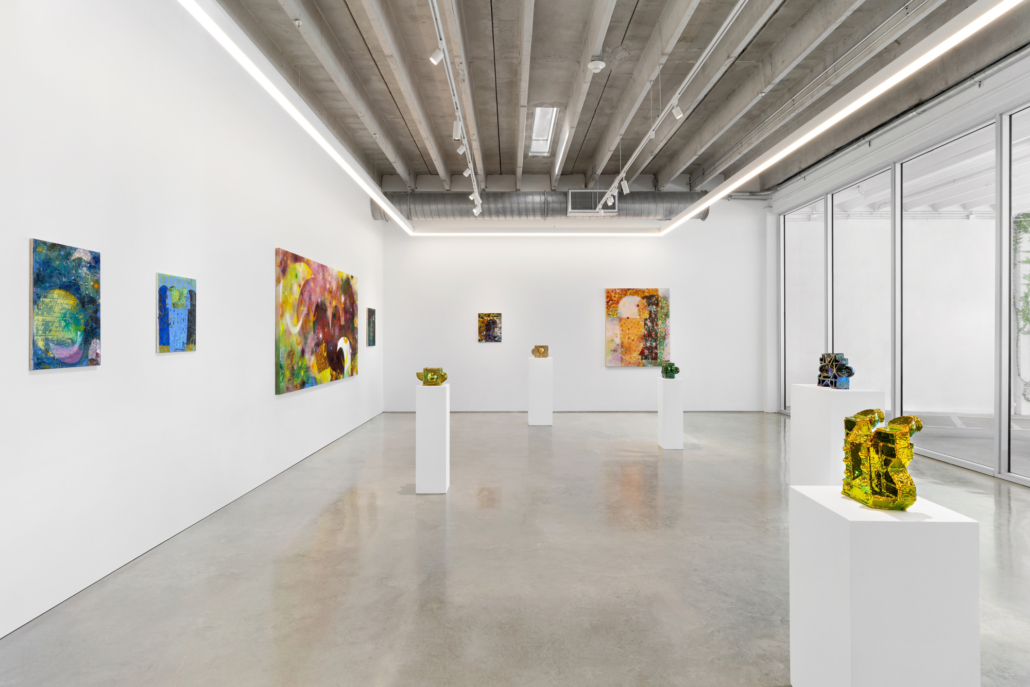
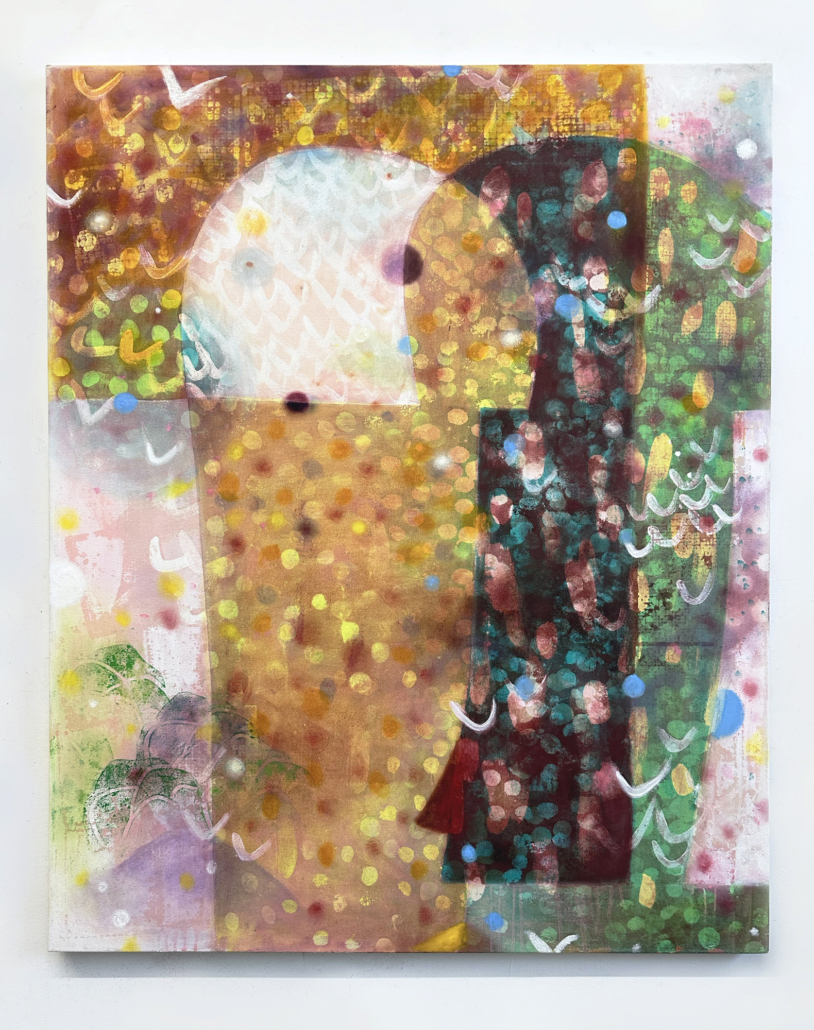
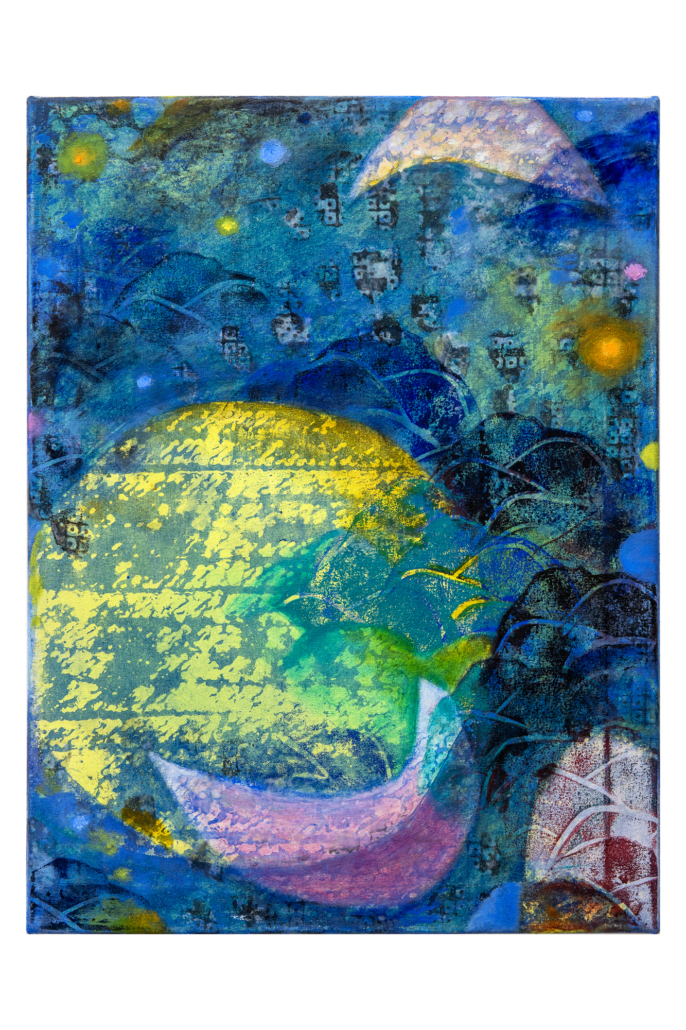
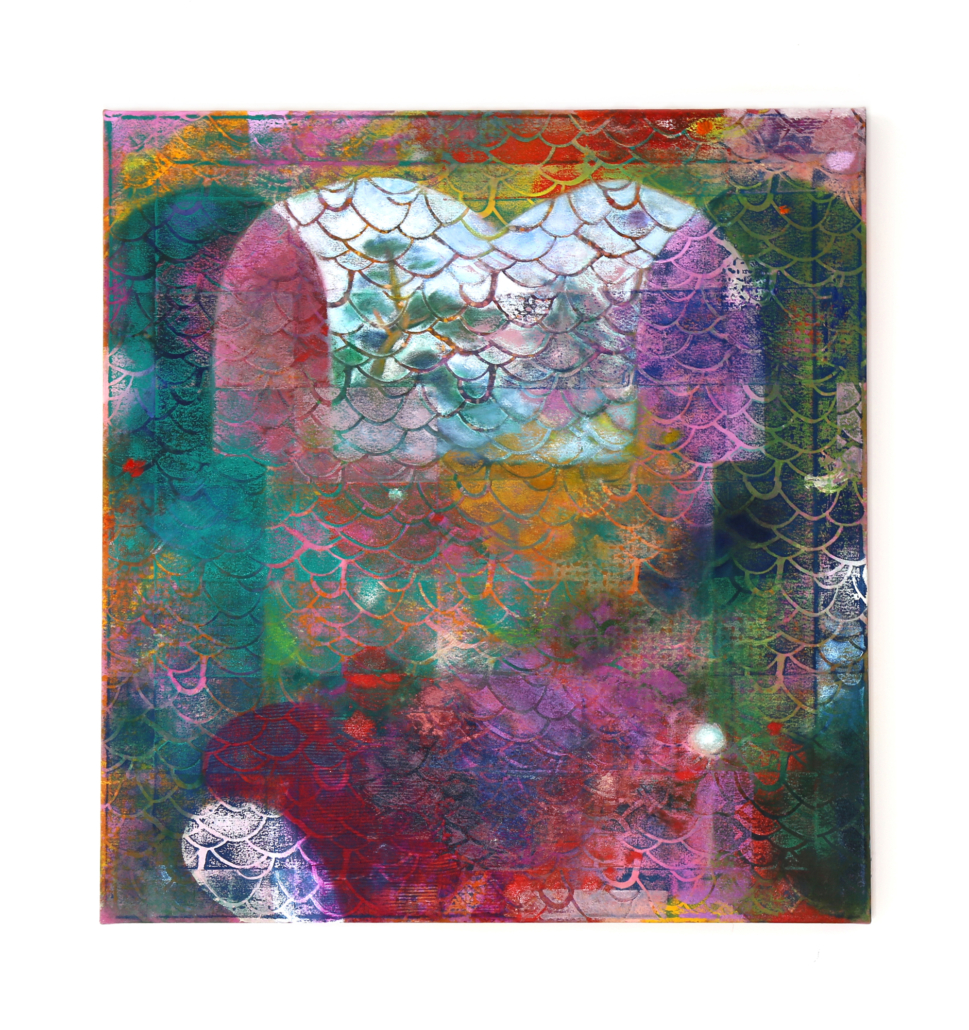
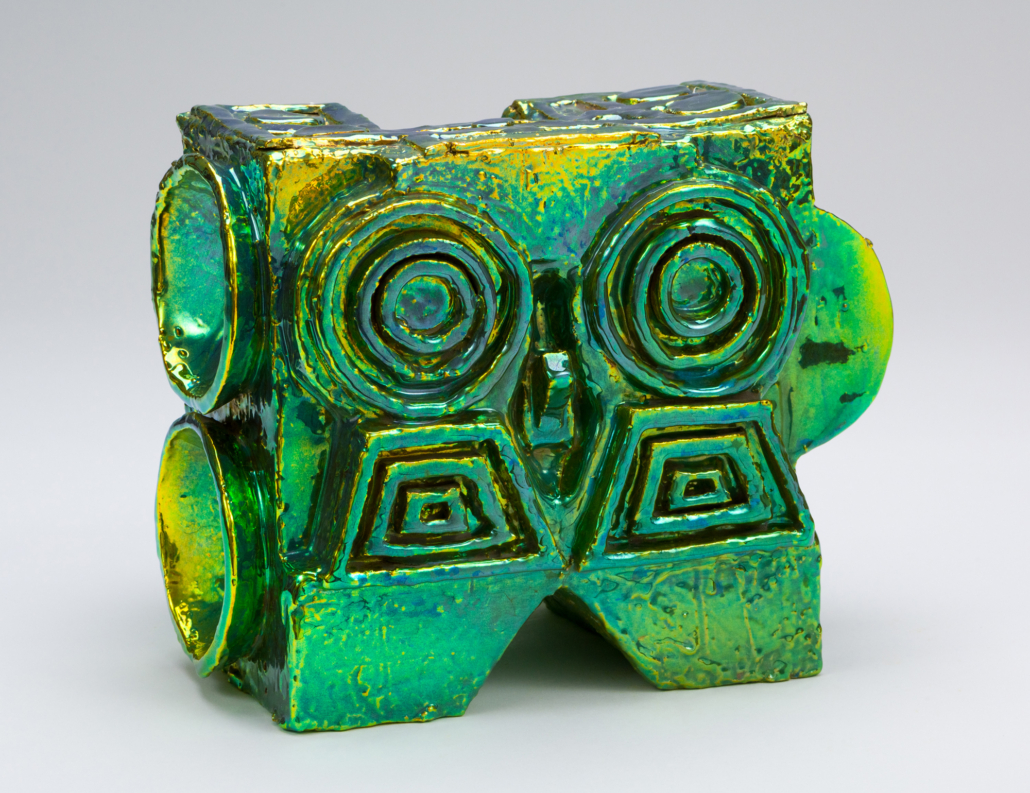
Mindy Solomon is pleased to present Kiwha Lee and Julia Kunin: Electromagnetic Signature, a dynamic pairing of two- and three-dimensional works that explore the tension between material presence and invisible information.
Exhibiting at the gallery for the first time, Kiwha Lee presents a thought-provoking body of work that re-engineers the mechanics of pattern, light, and pictorial depth. Lee writes:
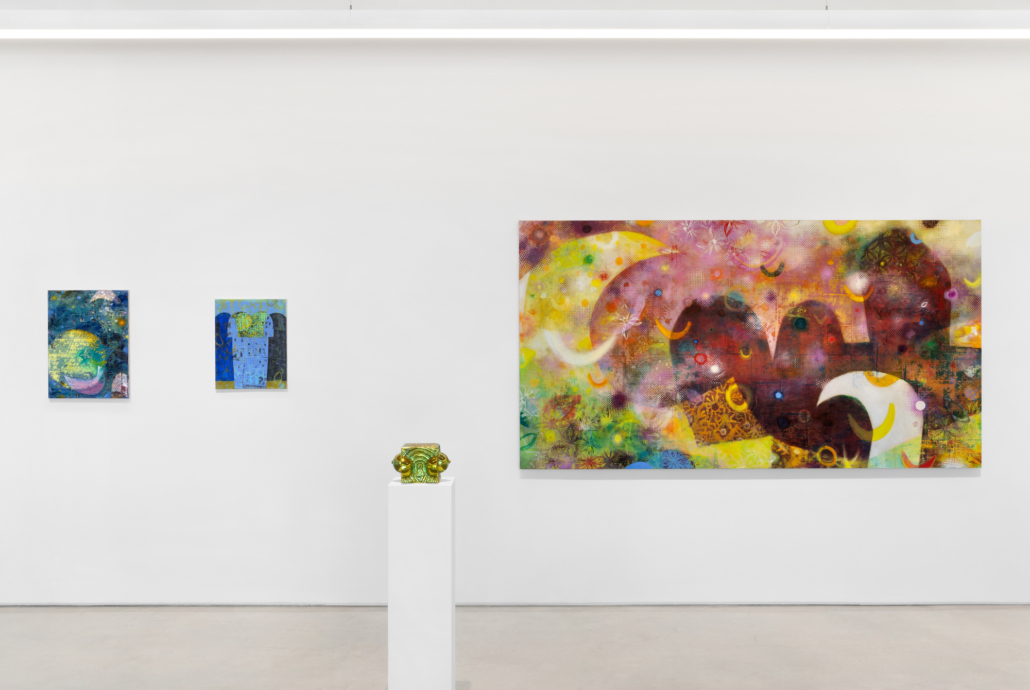
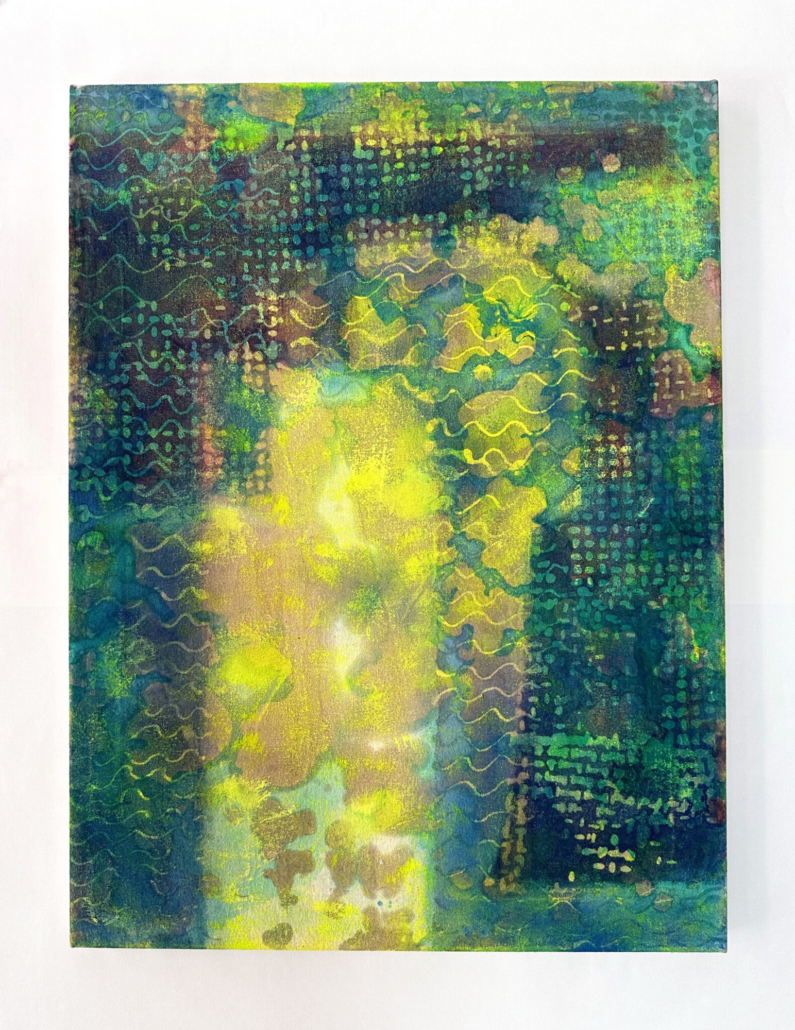
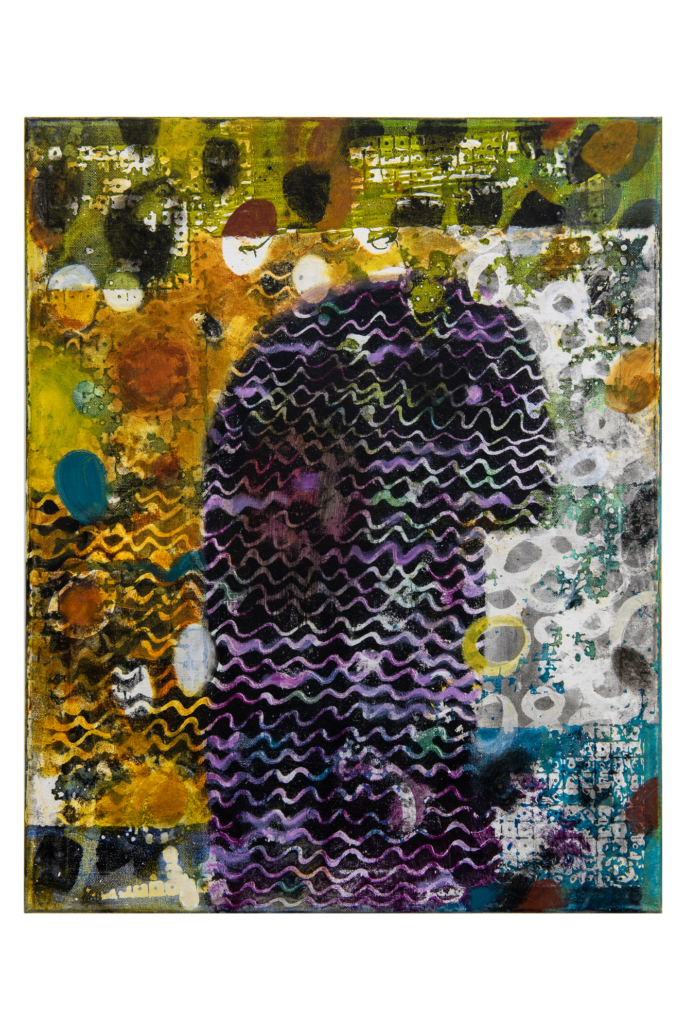
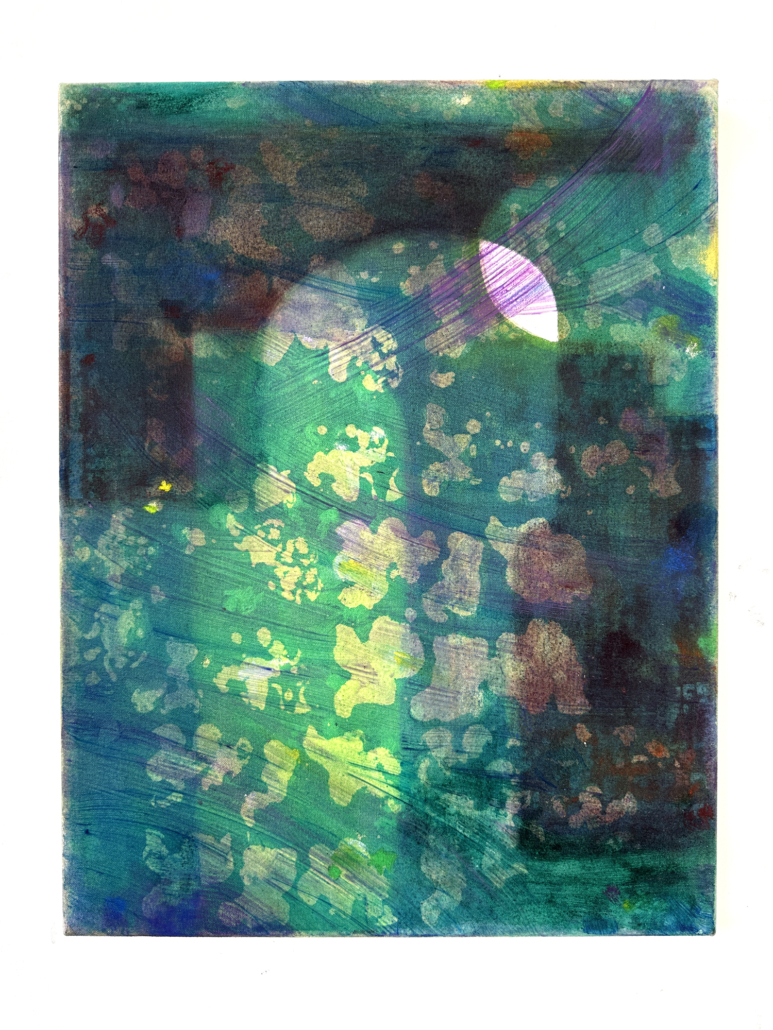
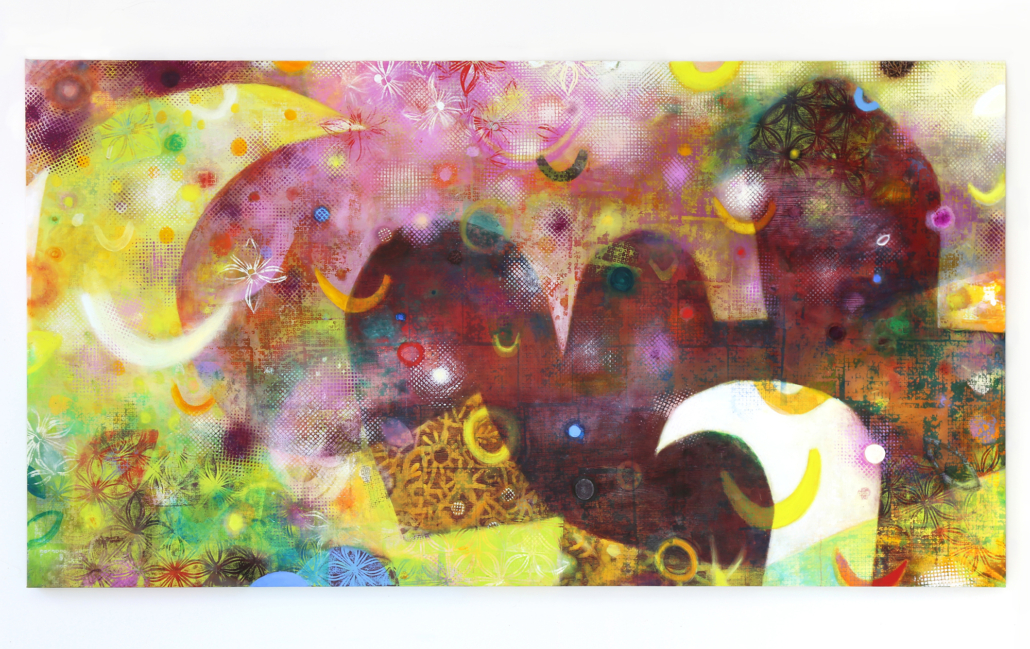
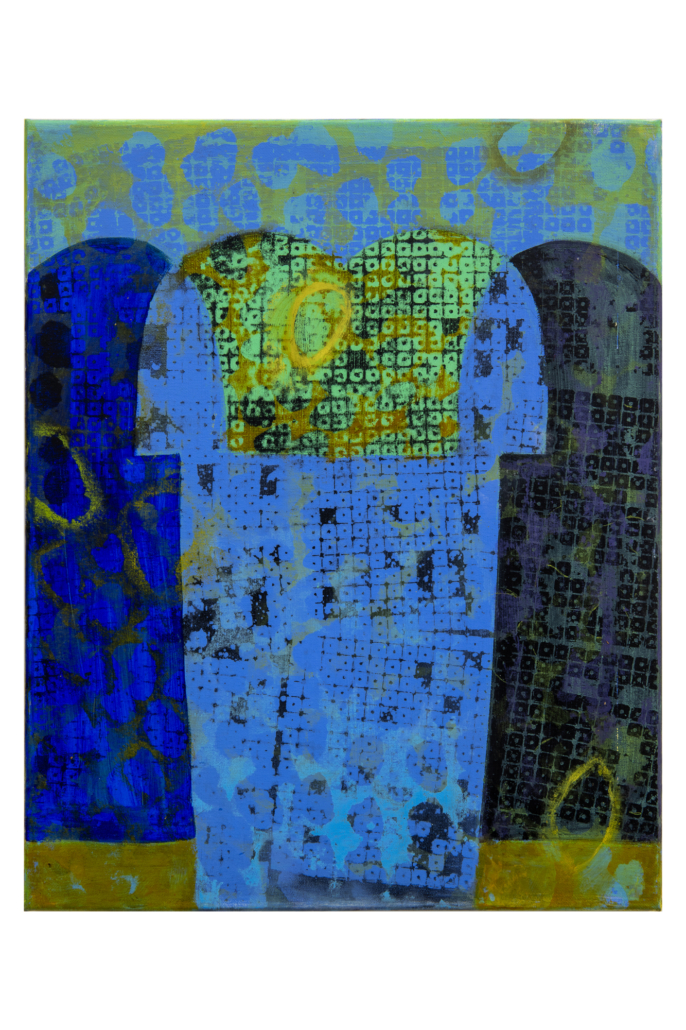
“What if painting isn’t just a window to look into, but a porous screen through which light, air, and vision can pass? My paintings ask how painting can move beyond Alberti’s Renaissance conception of the painting as an open window onto the world. I look instead to the jali, a perforated ornamental architectural screen that regulates the passage of light, air and vision, as an alternative model for constructing pictorial space. Rather than treating pattern as flat decoration, I use it as an active structure that simultaneously obstructs and enables vision. Through translucent layers and shifts in opacity, I make the canvas appear backlit. Light doesn’t just hit the painting from the front; it seems to punch forward from behind, changing how we perceive depth. Informed by Korean and Chinese pictorial traditions, I build these layers through repeated hand-printed patterns at varying scales, reinventing historic Asian resist-printing techniques in oil on canvas. The patterns simultaneously block, filter, and open up vision, making it difficult to locate exactly what is surface and what is depth, what is figure and what is ground, what is inside and what is outside.”
Julia Kunin returns to the gallery for her second exhibition, presenting a new body of work that embraces abstraction while emerging from a space of figuration and gender specificity. Kunin writes:
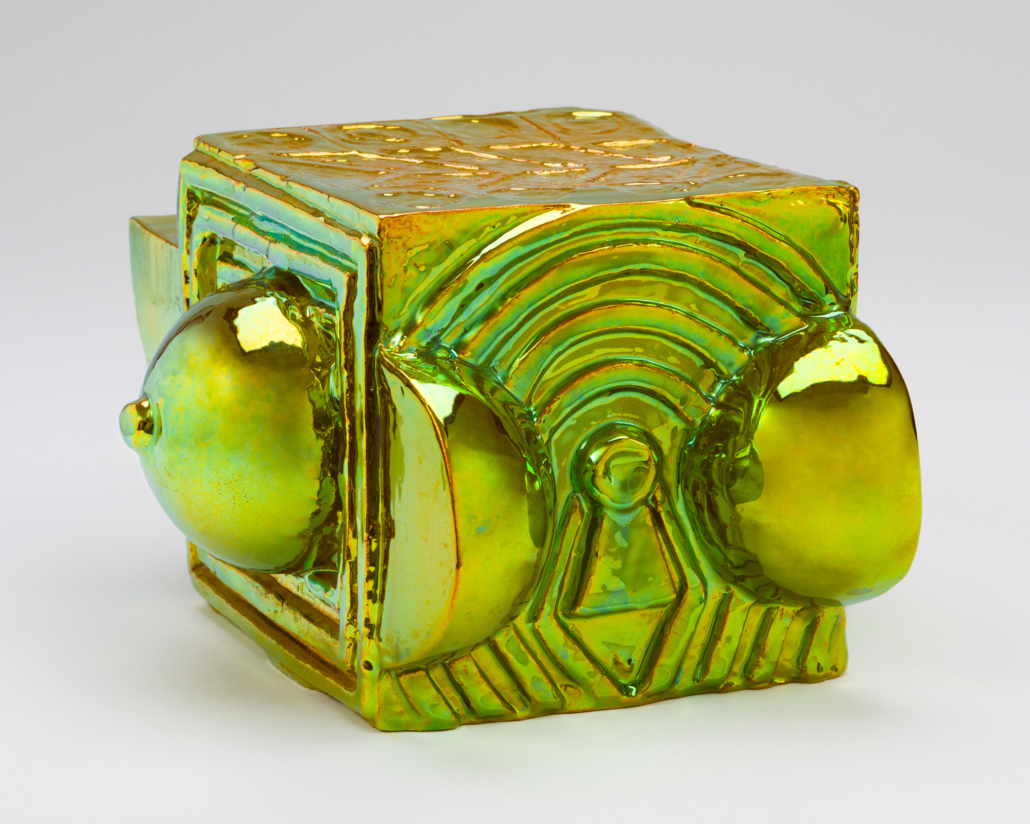
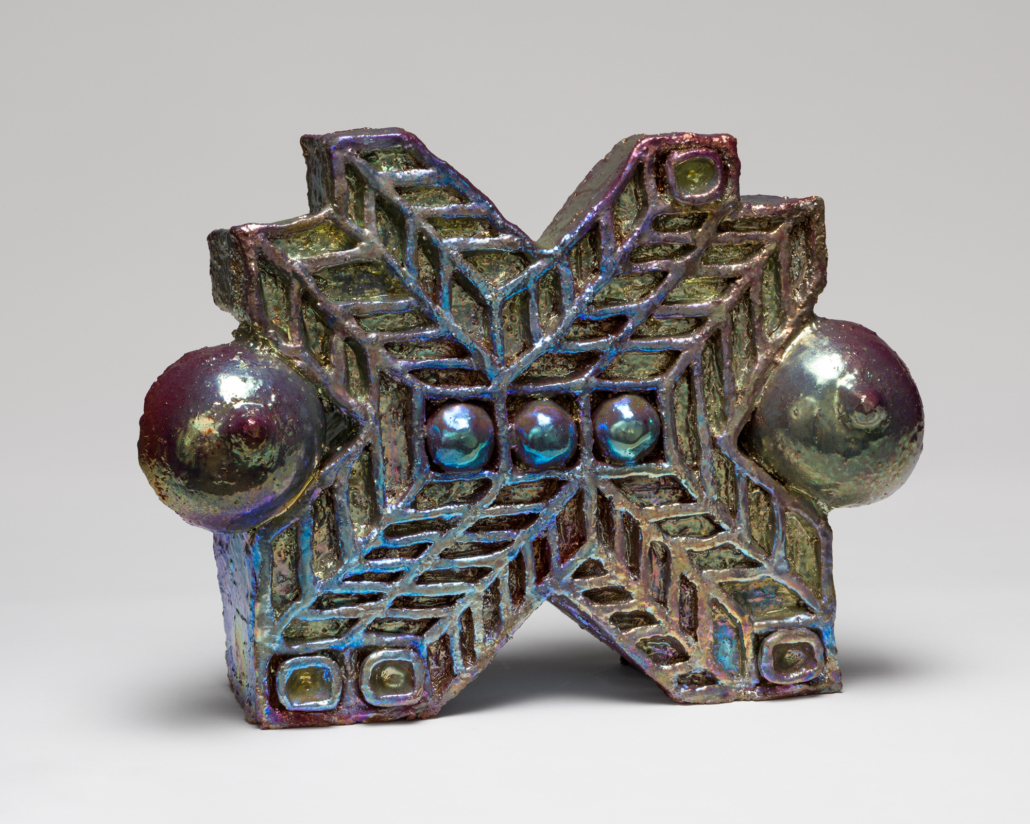
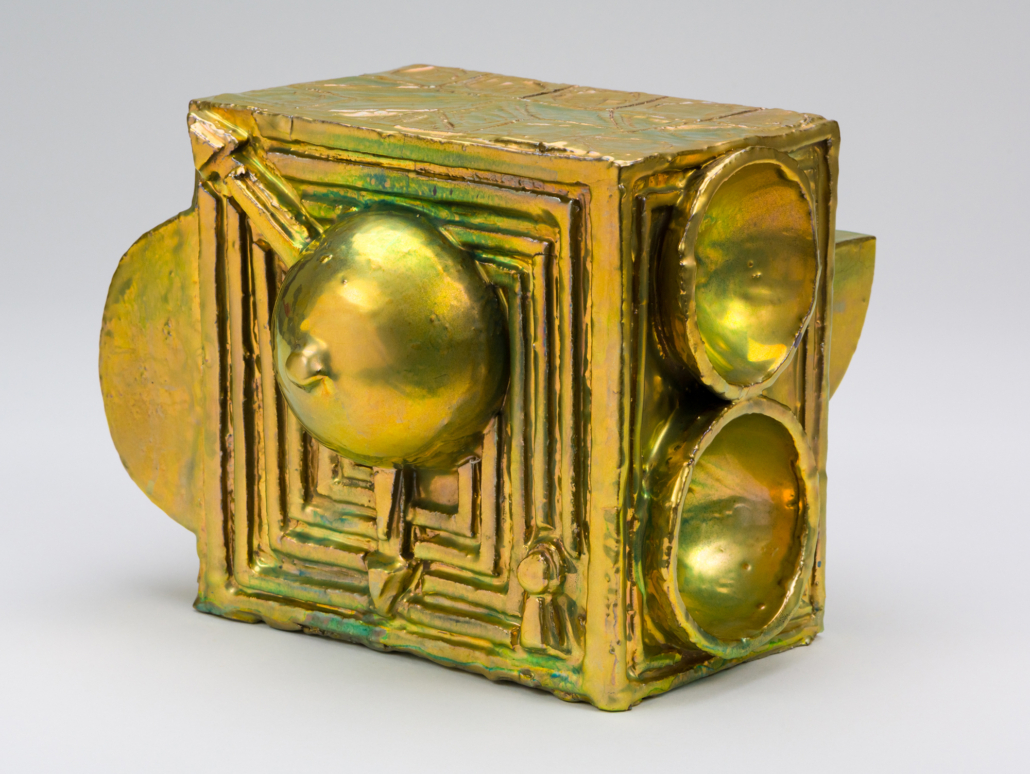
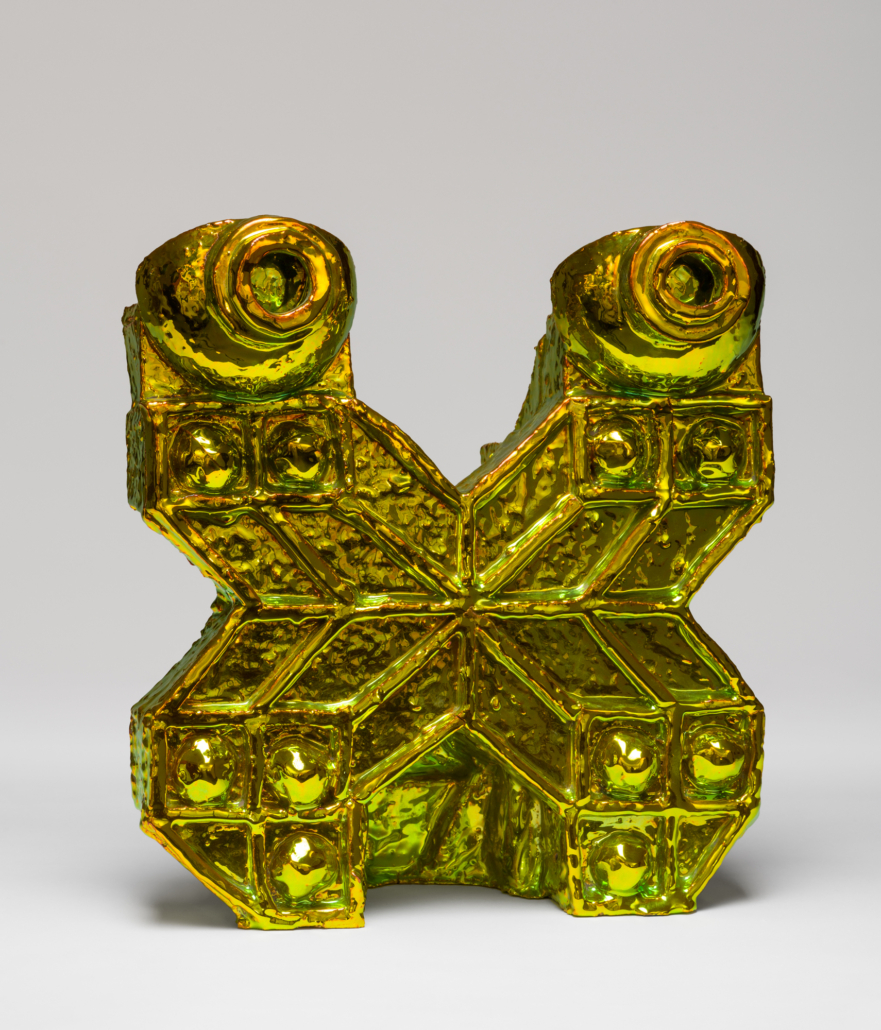
“In creating feminist and queer sculptures that reference the figure, I combine personal symbols with surrealism. My work has long been influenced by the decorative arts and Art Nouveau ceramics, which can be seen in the glazes I use. Here, the glitter and iridescence of the femme fatale have been transformed into a gender-fluid warrior. The interior mirroring in the work creates a baroque visual onslaught, merging body, machine, and architecture. These otherworldly totems address sexuality while incorporating nostalgic space-age imagery.”
Both artists engage with space and pattern as fundamental elements of their practices, exploring how light operates either through internal reflection or structural permeability. From a purely visual perspective, affinities emerge in their forms, surfaces, and palettes. Yet the dialogue between the works extends beyond these formal similarities. There is a palpable sense of energy—an almost tangible “electricity”—that moves between Lee’s backlit, “back-to-front” paintings and Kunin’s highly reflective, mirrored sculptures.
Together, the artists create an environment in which boundaries between surface and depth, body and architecture, material and image, and the visible and invisible become fluid. Electromagnetic Signature considers how pattern, luminosity, reflection, color, and spatial perception can activate the space between artwork and viewer, transforming looking into an immersive and dynamic exchange.
Julia Kunin lives in Brooklyn, New York, and works frequently in Hungary. She earned a B.A. from Wellesley College and an M.F.A. from the Mason Gross School of the Arts at Rutgers University. Her work explores themes of queerness, feminism, and the relationship between architecture and the body.
Solo exhibitions include Laughing Castles at Klaus von Nichtssagend Gallery, New York, NY (2025); Dream Machines at Mindy Solomon Gallery, Miami, FL (2023); Mechanical Ballet at Kate Werble Gallery, New York, NY (2021); Rainbow Dream Machine at McClain Gallery, Houston, TX (2020–2021); Les Guérillères at Sandra Gering Gallery, New York, NY (2015); Golden Grove at Barry Whistler Gallery, Dallas, TX (2013); Nightwood at Greenberg Van Doren Gallery, New York, NY (2012); Against Nature at Greenberg Van Doren Gallery, New York, NY (2007); and Crimson Blossom at the Deutsches Ledermuseum, Offenbach, Germany (2002).
Recent two-person exhibitions include Kaleidoscope Eyes with Mara Held at McClain Gallery, Houston, TX (2023), and Wild Chambers with Yevgeniya Baras at Mother Gallery, New York, NY (2022).
Recent group exhibitions include The Surreal Body at Seven Sisters Gallery, Houston, TX (2026); Painting Deconstructed at Ortega y Gasset Projects, Brooklyn, NY (2024); I’ll Be Your Mirror at the Queer Biennial, Detroit, MI (2024); Behind This Mask, Another Mask, curated by Sam Adams at Abigail Ogilvy Gallery, Los Angeles, CA (2023); Queer Clay at the American Museum of Ceramic Art (AMOCA), Pomona, CA (2023); and Conversing in Clay at the Los Angeles County Museum of Art (LACMA), Los Angeles, CA.
Kunin received a Guggenheim Fellowship in 2026. She was a Fulbright Scholar to Hungary in 2013 and received a Trust for Mutual Understanding Grant to Hungary in 2010. In 2008, she received a Pollock-Krasner Foundation Grant and a residency at Art Omi. In 2007, she participated in the John Michael Kohler Arts/Industry Artist Residency.
Additional fellowships and residencies include MacDowell, the Marie Walsh Sharpe Art Foundation, a CEC ArtsLink Grant to the Republic of Georgia, an artist residency in Wiesbaden, Germany, Yaddo, the Millay Colony, Vermont Studio Center, The Core Program in Houston, Texas, and Skowhegan.
Kunin currently has a series of ceramic lamps at Ralph Pucci International. She has written artist interviews for Two Coats of Paint and serves on the board of FIAR (Fire Island Artist Residency), the LGBTQ+ Fire Island artist residency.
Kiwha Lee is a painter based in New York City whose work proposes an alternative model through which to approach pictorial space. Instead of the Albertian conception of painting as an open window (finestra aperta) onto the world, she developed a counter-framework that draws on the architectural logic of the non-western architectural jali —a latticed, patterned screen that allows for light, air, and vision to pass through instead of the European glass window. First articulated in her 2022 Hunter College MFA thesis, Ambiguity of Vision: Reimagining the Hypervisible Void, this framework conceives of the picture plane as a permeable boundary that is simultaneously surface and opening — enabling patterned light to be seen and felt. Her “back-to-front” pictorial structure often produces a backlit sensation, as light appears to “punch forward” from behind the picture plane, allowing the outside world to enter and transform the viewer’s space.
Pattern functions in Lee’s paintings not as decoration but as an active mechanism in the construction of spatial depth, turning pattern into an architectural engine rather than a flat surface design. Her work is in active dialogue with European modernists such as Henri Matisse, whose use of textiles and ornament destabilized conventional distinctions between figure and ground and flattened perspectival space. Lee extends and challenges this modernist legacy by asking what pattern can do beyond flattening. Through repeated impressions, transfers, layering, and shifts in opacity, she unsettles fixed hierarchies between surface and depth, figure and ground, and interior and exterior. Drawing from Korean and Chinese landscape pictorial traditions, Lee reinvents ancient Asian textile resist-printing processes in oil on canvas, bringing multiple histories of pattern and pictorial space into dialogue.
Born in Seoul and raised across four continents, Lee received her MFA in Painting from Hunter College in 2022. Her New York solo debut, Light Punch, at CHART in 2024 was selected as an Artforum “Must See” and named by Artsy among five standout exhibitions at small galleries worldwide. Later that year, her first European solo exhibition, Reverse Universe, opened at Monti8 in Rome and was selected by Exibart as a must-see exhibition in Rome. In 2025, Lee was selected for a solo presentation in the Main Section of Arte Fiera in Bologna, Italy’s most prestigious modern and contemporary art fair.
Lee has exhibited at CHART, Fergus McCaffrey, Thierry Goldberg, Monti8, Ortega y Gasset Projects, COL Gallery, and other venues in the United States, Europe, and Asia. She was nominated for the Sovereign Asian Art Prize in 2018 and was named one of ARTCUBE Discoveries’ Top 100 Early-Career Artists for 2023-2024. Her work has been featured in Artforum, Artsy, Artribune, New American Paintings, Two Coats of Paint, ArtMaze, Vulture, Asian Art News, and Harper’s BAZAAR, among other publications. Her paintings are held in the Morgan Stanley Art Collection and private collections internationally. In 2026, she was a featured guest on Brian Alfred’s Sound & Vision podcast.

