
Blow
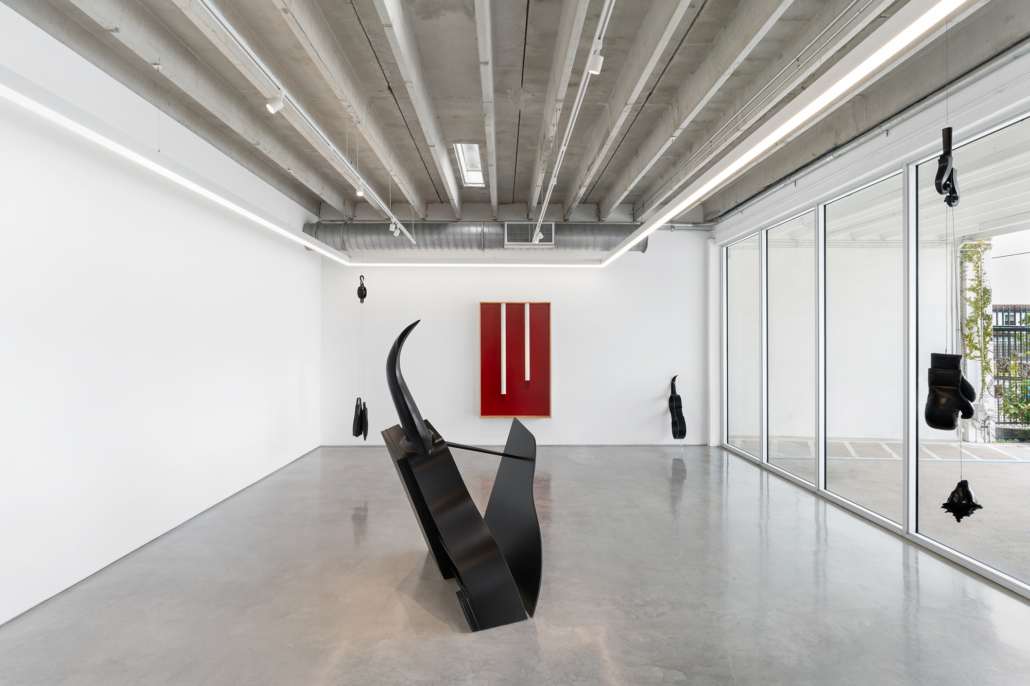
Mindy Solomon is excited to present Blow, the first solo presentation and second show for Christine Rebhuhn at the gallery. The exhibition is comprised of stand alone and relief sculptures rendered in her meticulous, concise manner. Rebhuhn writes: “Some of the most beautiful things can remain hidden from our view, because their expansiveness is too large to be knowable, or because they live inside the space of the mind. This work searches for what we cannot say.” Prominent curator and writer Anne-Laure Lemaitre contributed the following essay about the exhibition.
SILENT BLOW
By Anne-Laure Lemaitre
As silence is not silence, but a limit of hearing. — Jane Hirshfield
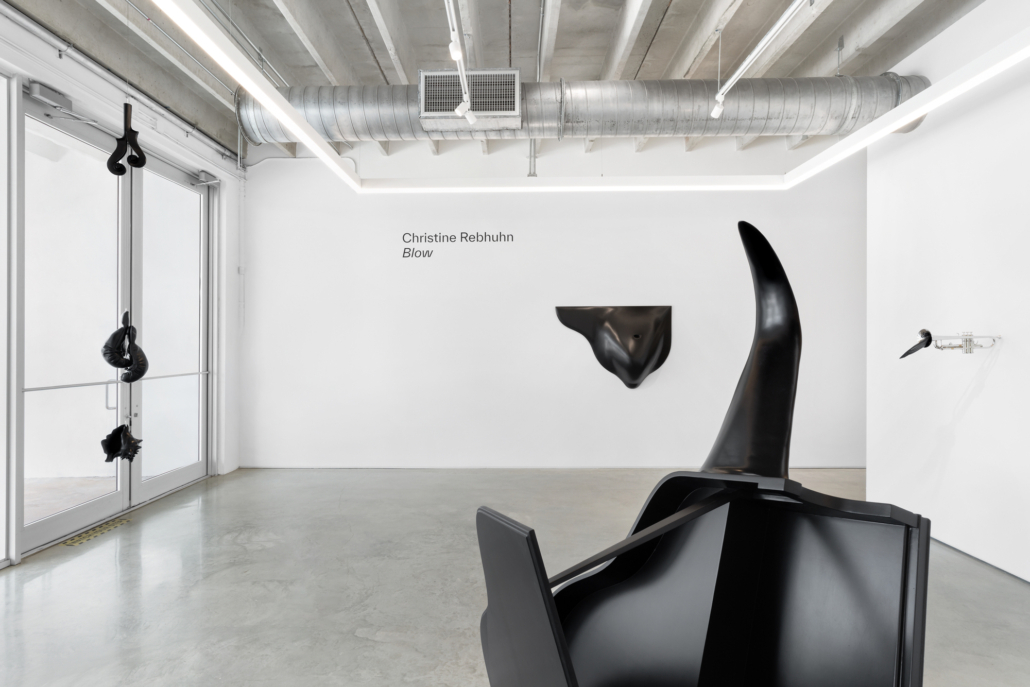
Blow is a word that presses against the teeth. It is small, clipped, almost nothing, yet it carries the force of an impact, the ache of loss, the faint trace of a note that may be sounded or remain silent. It is a breath that leaves the body, a strike that lands, a wave that breaks, a life that suddenly tilts. In the works which comprise this exhibition, Christine Rebhuhn moves inside that word, allowing its meanings to accrete slowly around a group of sculptures that feel, at first glance, almost quiet. The room is pale and spare: wood, metal, a few cables, touches of red. Underneath this apparent calm are years of reflections, decisions, and refusals that the works never fully confess.
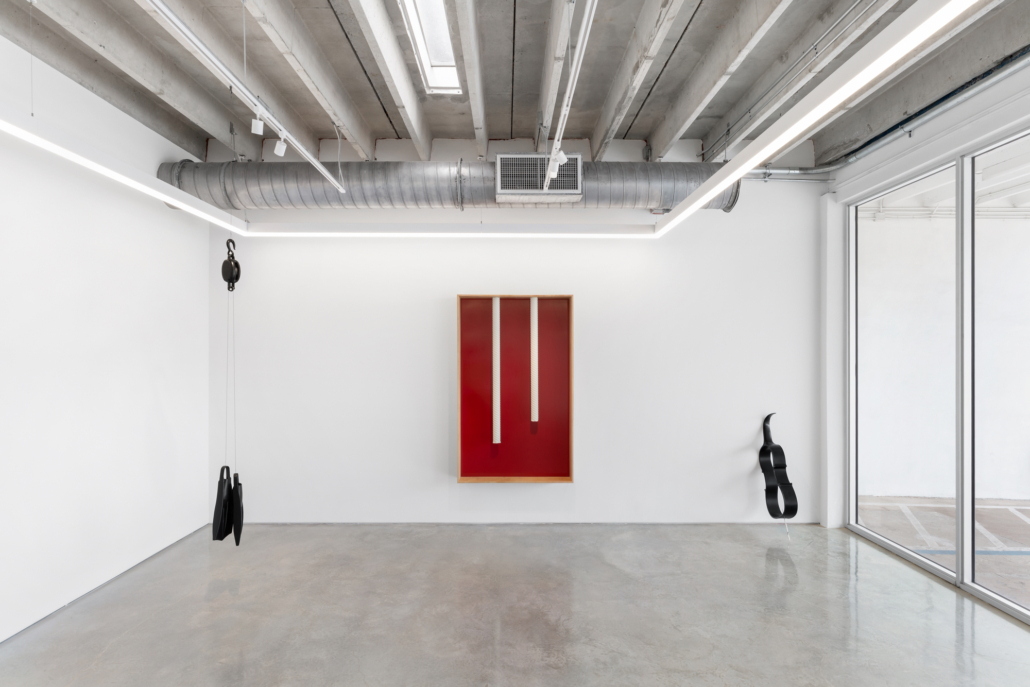
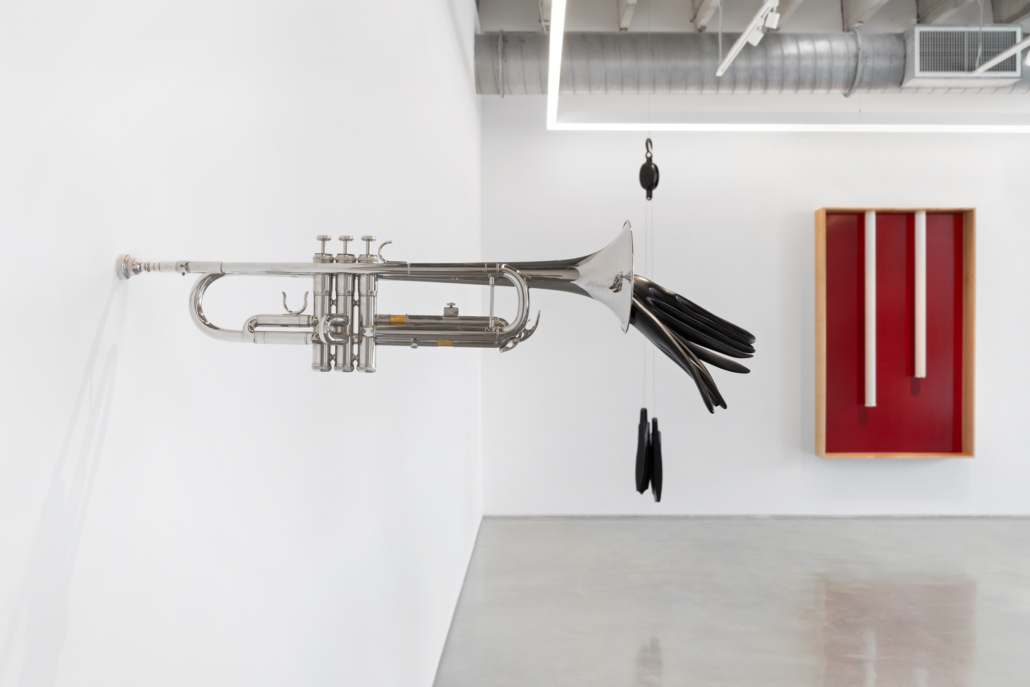
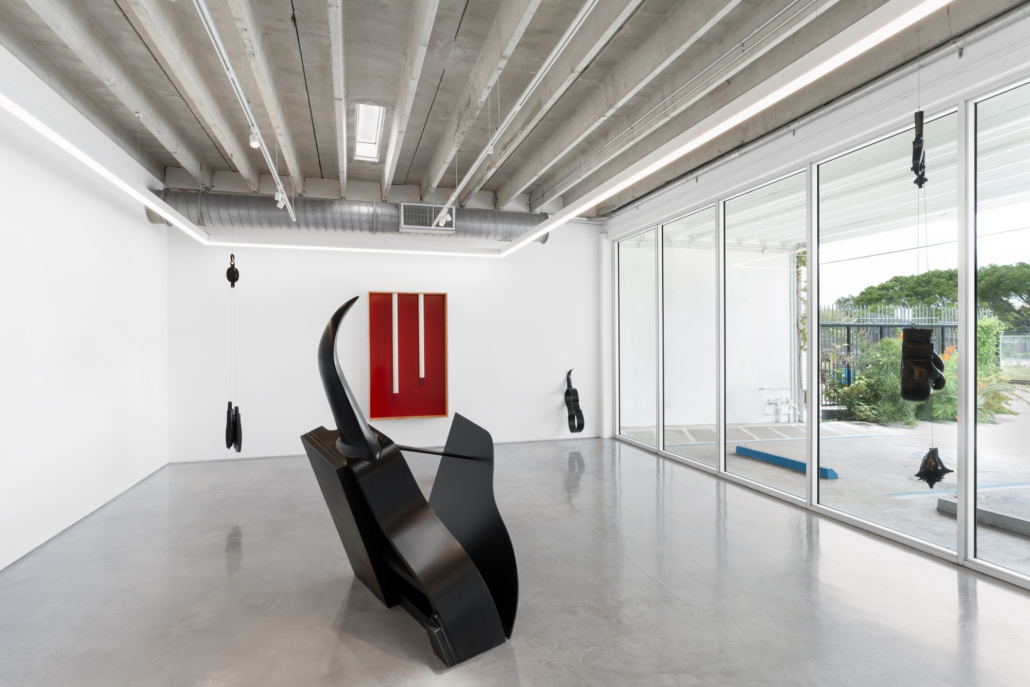
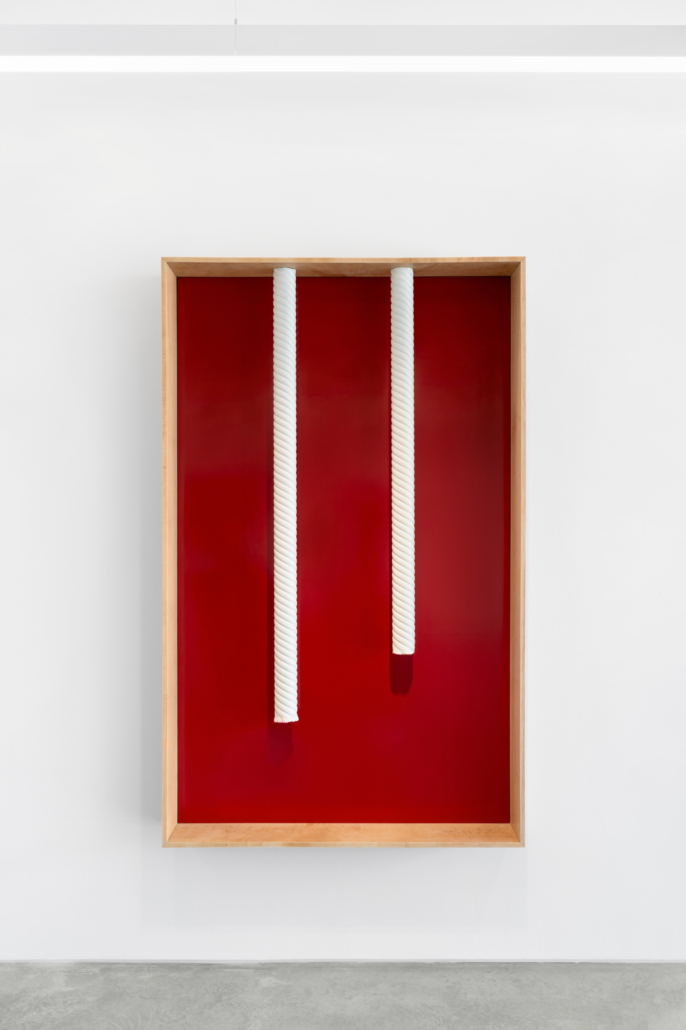
One piece immediately draws the eye. In it, two carved ropes hang against a blood- red panel in a deep maple frame. Shadows collect around the cords and shift as the day moves. The image recalls an earlier version the artist had made: ropes on red, a bucket, two porcelain teeth, a small rock form. That earlier work had a boxing title. This one borrows its name from Jane Hirshfield, who writes that everything has two endings, and the pair seems to absorb that thought, as if each line reflected a different outcome. The ropes belong to the sea and to the ring. The red belongs to the organ and to the stage. The frame holds them in place and invites you to grasp nothing too quickly.
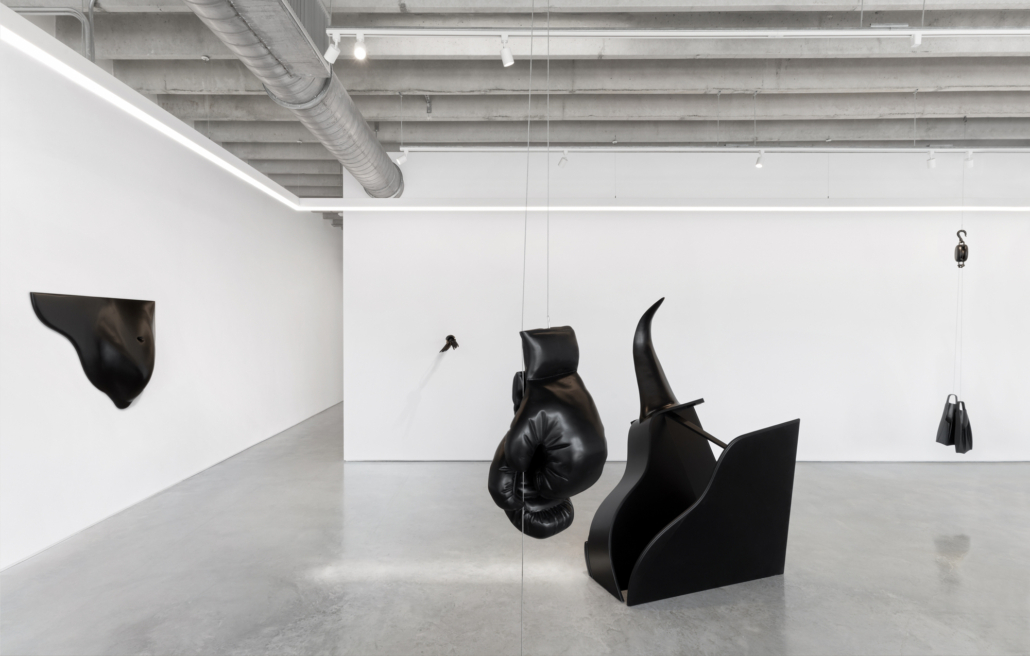
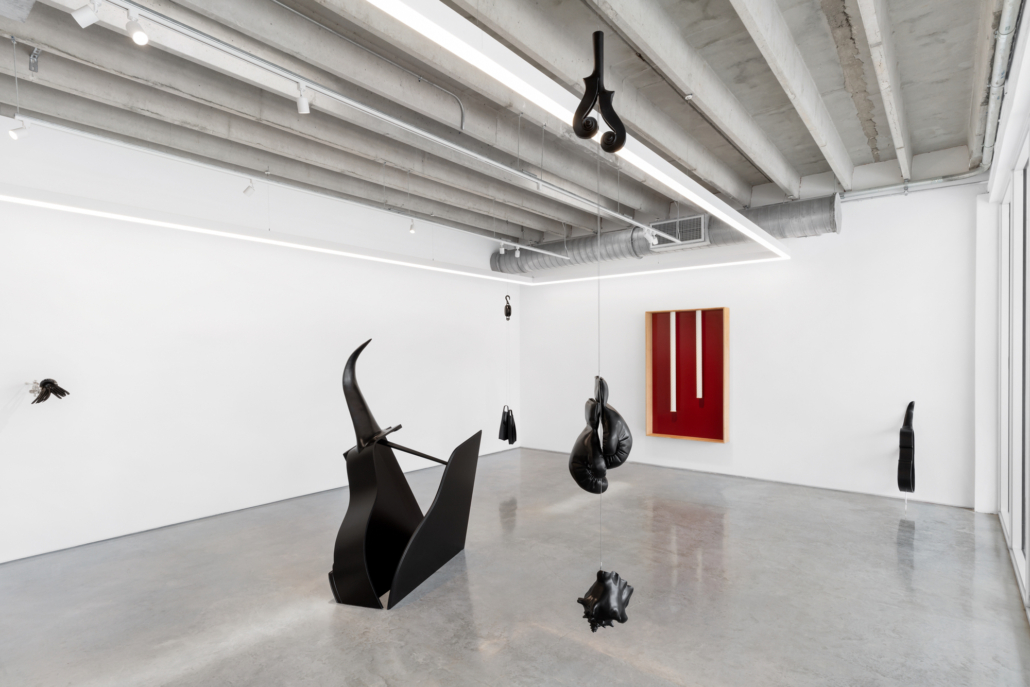
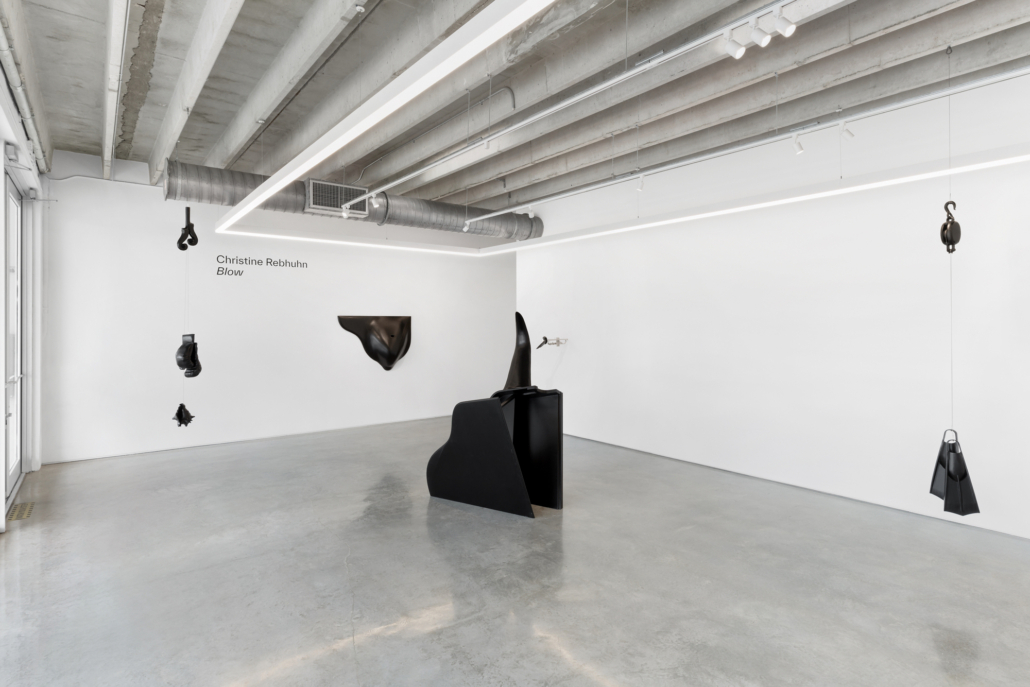
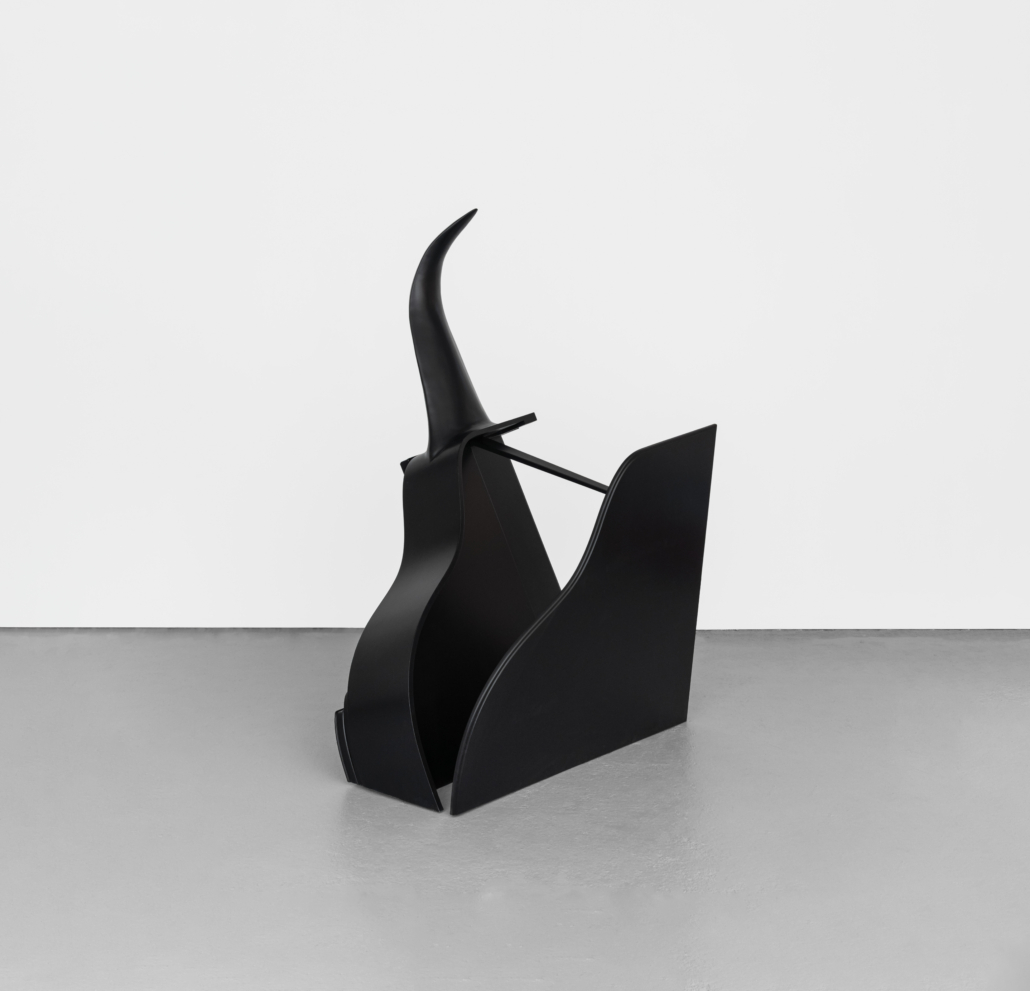
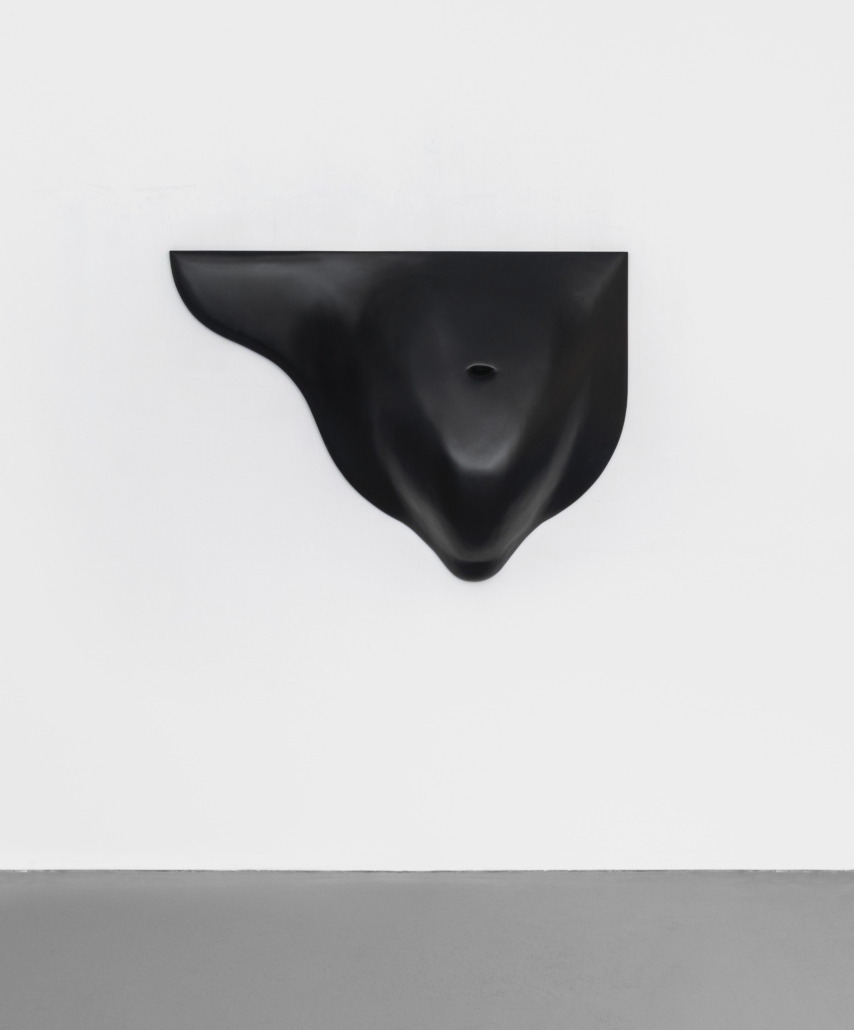
The show is full of these crossings. Orca fins and blowholes appear in the bodies of instruments, not as symbols laid over the surface, but as incisions made into wood that once carried sound. A piano lid becomes the broad back of a whale, its blowhole cut into the curve that would normally conceal strings. A piano leans and lists, its body interrupted by a curved fin that has taken on the posture of captivity, with that unnatural fold seen in animals who have been kept too long in small enclosures. The title, Drown Me, sits on this object like an instruction, a plea, or a confession. It could belong to the whale or to the instrument or to anyone who has felt the urge to go down in order to feel something once more, and the piece simply holds this request, or threat, inside its subtly balanced weight.
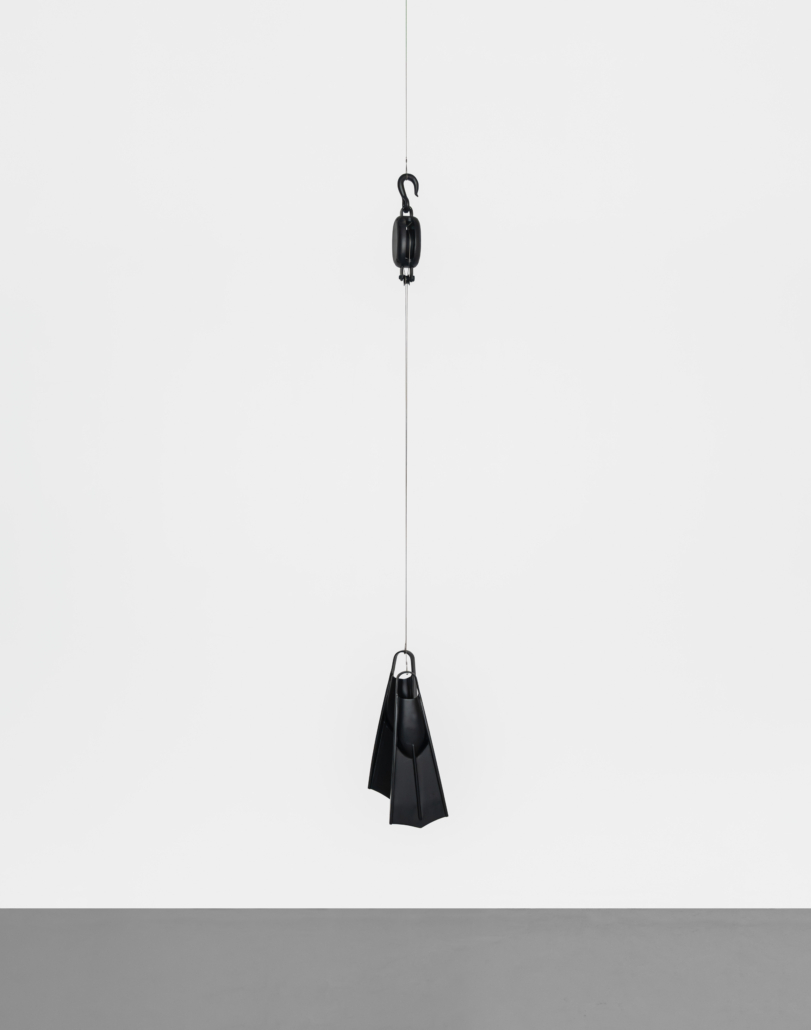
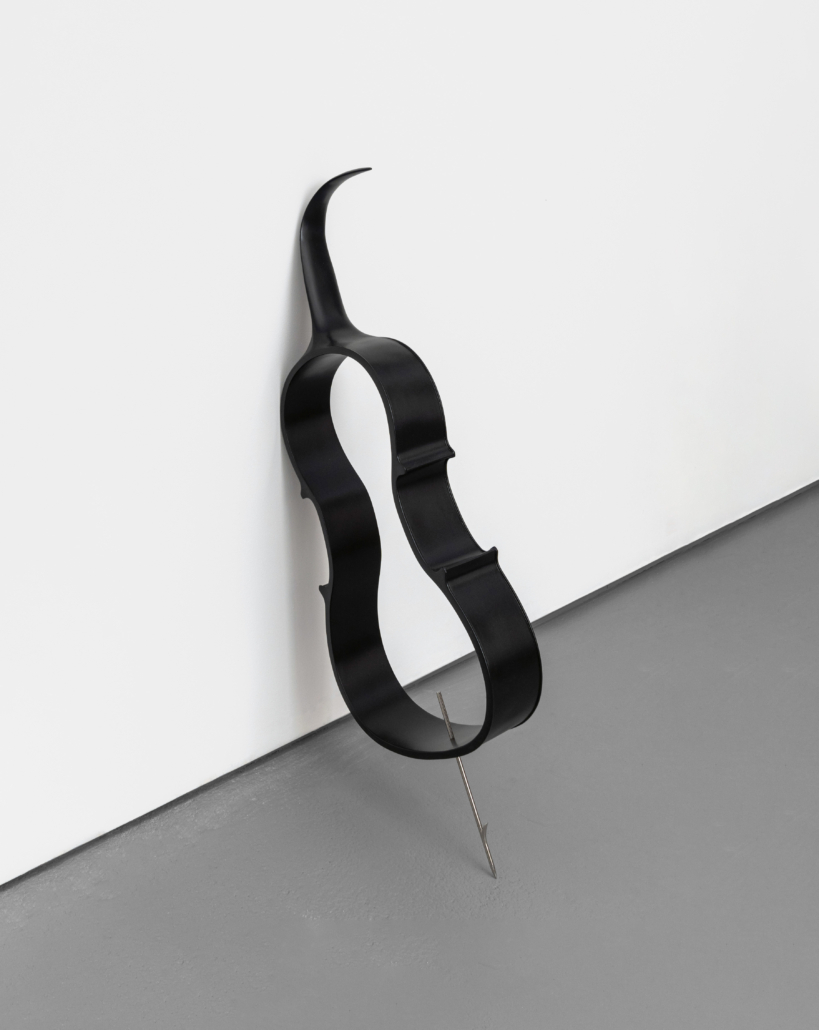
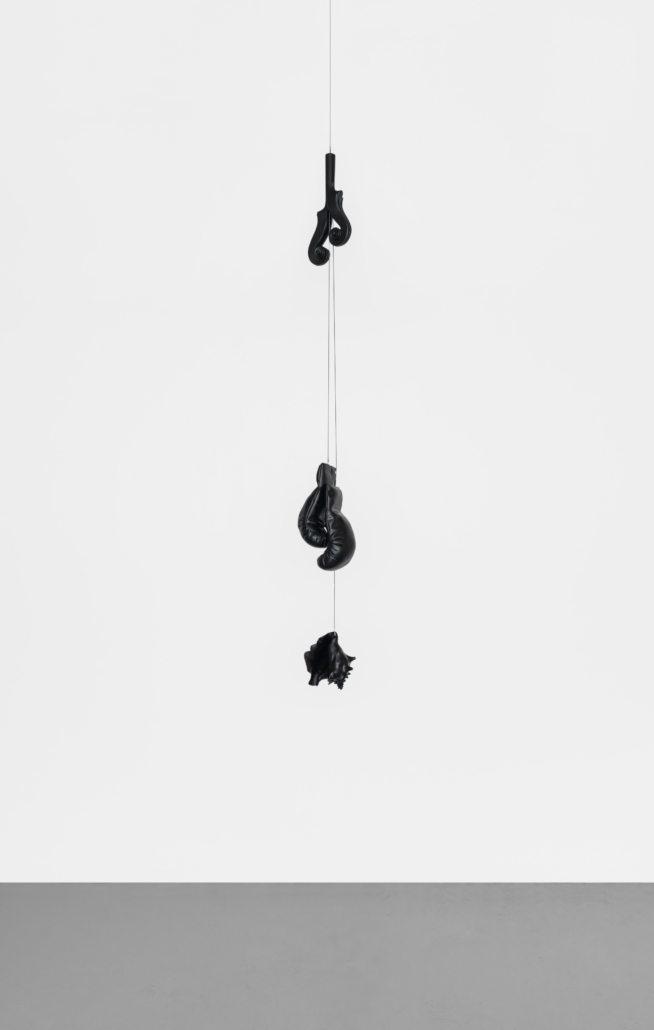
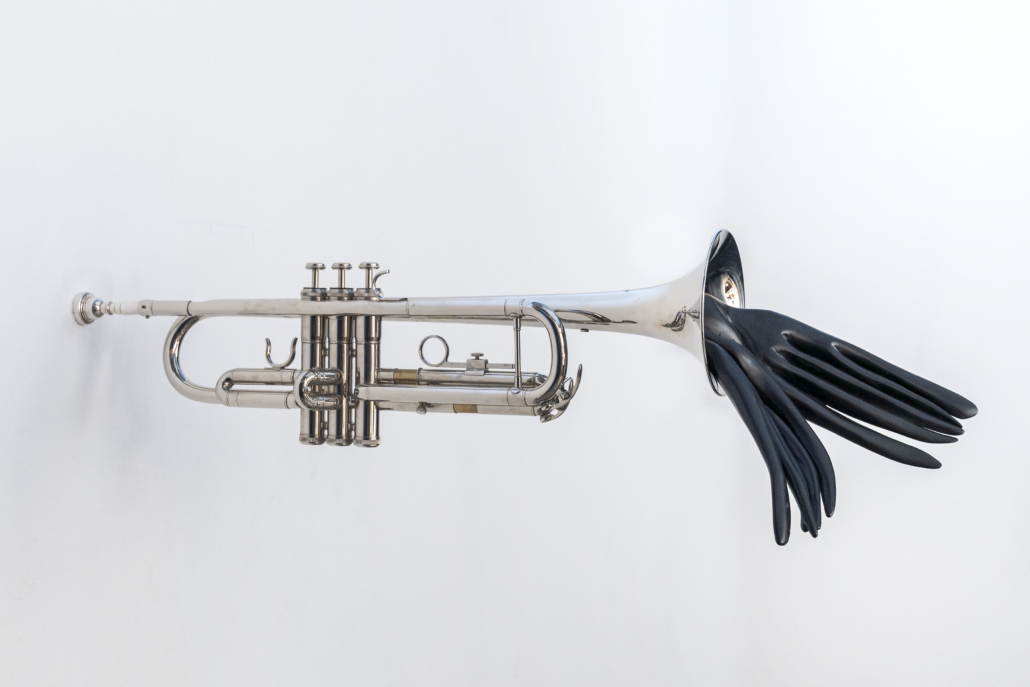
Sound is present in fragments: cello frames, necks, trumpet bells, the shell of an instrument without its strings. Objects have been emptied out and then reoccupied. A trumpet sprouts carved seal flippers. Cello necks hang like wooden pulleys, their scrolls turning gently into something closer to limbs or handles. A conch shell appears as both ear and mouth, turned into a point of suspension or whisper. There is a sense that music has been removed and replaced by another kind of pressure, one that sits between the animal and the tool, held in suspended, incongruous gestures.
Throughout the works, a constant thread of labor surfaces then recedes again. Large forms require wedges inserted into the grain, gaps filled, long sessions of angle grinding, days of sanding until the joints disappear. The artist is insistent on inhabiting this process, on making the work herself, on the stubborn commitment to a single material whenever possible. The instruments and the sculptures share wood, share weight, and the slow accumulation of time. This effort is not presented as prowess. It is concealed as carefully as humanly possible. The finished pieces aim for seamlessness, a smoothness that hides their construction. Joints are hidden. Fillers are invisible. Friction is minimal, yet there is a sense, if one stands with the work for long enough, that the stillness is hard-won. The surfaces do not boast about what it took to bring them into being. They only offer their final state, as if they had always existed as is, as if they had slid into the room fully formed. Their crafting process is part of the tension these sculptures quietly maintain.
Titles provide a different register of contact: Drown Me, Finish Me, Touch the Bottom, Across the Long Ocean, Swell, Breech, Everything Has Two Endings. Many of these could be read as fragments of a single, continuous monologue: someone asking to be completed, someone submitting to immersion or surrender, someone pressing against the floor of a body of water just to feel where it gives. The words risk melodrama. They sit close to the edge of what one might call too much. Yet they are attached to objects that resist confession and excess. The sculptures do not narrate. They do not spell out harm. They do not offer catharsis. Instead, the sharpness they invoke, paired with their reticence, creates a narrow corridor for the viewer to move through, a place where one can feel a lot and know very little.
Humor lives in that corridor too, in small doses. A trumpet with flippers is not only somewhat tragic; it is also faintly absurd, like a joke told under the breath. A whale captured in a piano’s outline is an image that could belong to feverish dreams, news stories, or internal landscapes where all intense feelings attach themselves to objects slightly too small to hold them. The combination of boxing gloves and conch shell, hung from cello necks, recalls a child’s improvised game, a private system for sending messages across distance. Across the Long Ocean does not only delineate a specific geographic place. It is the space between one person’s inner life and another’s, between an animal entrapped for entertainment and its spectator, between the person who is making these works and the one standing in front of them without knowing their full story.
The exhibition does not resolve this distance. It cultivates it. In a way, Rebhuhn may experience secrecy as a kind of pleasure, the knowledge that certain aspects of her works will only ever be fully legible to very few, while for the majority they remain open, available to other readings. The show does not set out to teach. It does not offer a thesis on captivity or labor or grief. Instead, it sets up a series of conditions or contexts: a rope against red, a fin spilling from a piano, a pair of flippers hanging from a pulley, a shell that wants to be listened to and avoided at once. In each case, something is about to happen or has already happened, but the climatic, crucial moment lingers just slightly offstage.
To walk through this presentation is to move through a sequence of held breaths. The windows in the gallery allow light to move across the room, so that shadows thicken and thin over the course of a day. The large floor piece holds its tilt as if caught mid-fall. The hanging works take up space around shoulder and belly height, so that the body of the viewer is constantly aware of its own position relative to them. One might brush past the path of a glove, stand beneath a shell, circle the piano to see how the fin meets the frame. The room is not busy, yet everything feels close and connected. There is very little slack.
The notion that “everything has two endings” hovers over the exhibition. A rope can save or strangle, steady or bind. A blow can open a passage or collapse a lung. A wave can carry someone back to shore or further from it. The sculptures sit at the pivot between plural possibilities. They do not declare but allow multiple outcomes to remain plausible, opening a space in which the viewer’s own experiences and fears, their own brushes with impact, breath, and depth, can attach themselves to the objects at hand.
In that sense, Blow is less a statement than a state. It gathers a set of images and forms around a single syllable and lets them press against one another, gently, persistently. It trusts that what has been carved into the wood, what has been left unsaid in titles, what has been withheld in narratives, will find its way into the nervous systems of those who spend time in the space. The works give form to hinges: the second before a punch lands, the instant when a whale’s back breaks the surface, the fraction of time when a diver’s foot leaves the deck, when breath is still held, when nothing has quite happened yet and everything has already begun. A rope ends in a knot and a fray. A song ends in silence or in an echo that lingers. A blow is an impact, and Blow, really decisively, requires that we feel what happens in our own body when we are confronted with the unknown territory between the familiar and the unexpected, the hinted and the unsaid.
With bold strokes and singular vision, Rebhuhn brings yet another impactful show to the Miami audience; crafting works that tell stories yet to be heard.
About Christine Rebhuhn
Christine Rebhuhn holds an MFA in Ceramics from Cranbrook Academy ofArt, and a BA in Studio Art and Psychology from Kalamazoo College. Her works have been exhibited in solo presentations at Thierry GoldbergGallery in New York, NY, NARS Foundation in Brooklyn, NY, Soo Visual ArtsCenter in Minneapolis, MN, and at Makeshiftin Kalamazoo, MI.
Her work has also been in two-person exhibitions at Mindy Solomon Gallery in Miami, FL, and Swivel Gallery, New York, NY. Her work is permanently installed at the Lester Buresh Wellness Center, commissioned by the city of Mount Vernon, Iowa. She has attended residencies at the Vermont Studio Center, Elsewhere, NARS Foundation, and Makeshift.

